
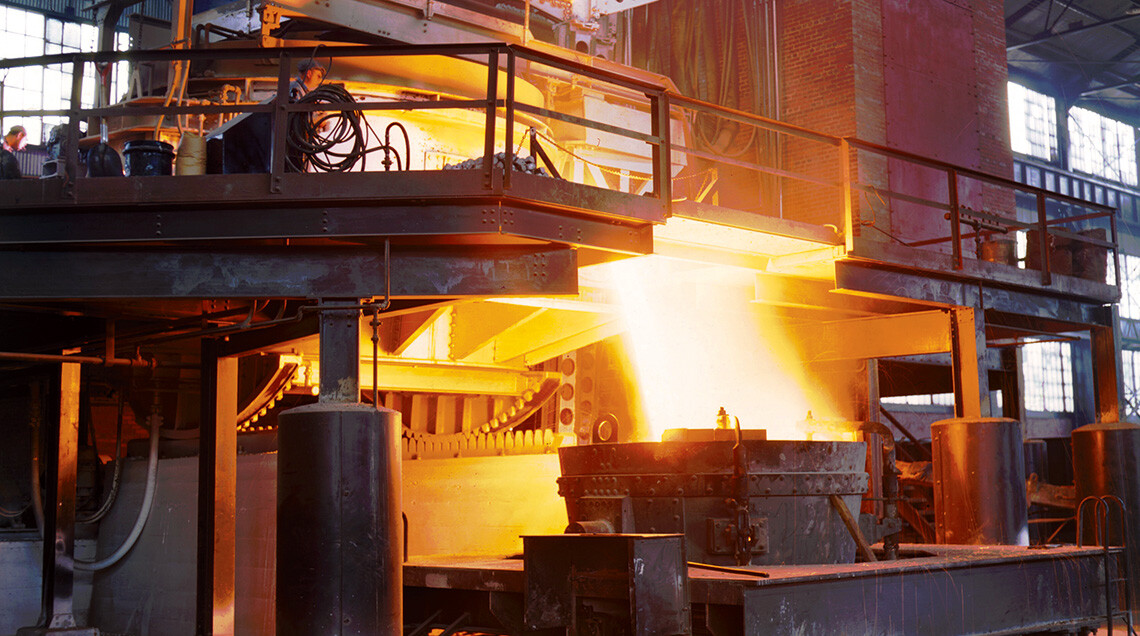
In recent months, an increasing number of companies in the EU steel industry have reported fires and production stoppages
The fall of 2025 was one of the most difficult periods for the European steel industry in recent years. From France to Poland, companies announced temporary shutdowns, emergency incidents, and prolonged downtime, which only exacerbated the sense of crisis that had engulfed the industry amid weak demand, high energy costs, and competition from cheap imports.
The first big news was ArcelorMittal Poland’s decision to temporarily shut down blast furnace No. 3 in Dąbrowa Górnicza. The company’s management explained this move by a combination of negative factors: record high energy prices, high carbon costs, and an influx of cheap imports. According to the Polish Steel Association, imports already cover 80% of the country’s consumption, and for flat products, this figure is as high as 95%.
In October, the situation was complicated by a series of accidents. At the French ArcelorMittal Fos-sur-Mer plant, a major fire damaged two conveyor lines, leading to the shutdown of blast furnace No. 2 and the steelmaking shop. Although there were no casualties, the consequences were significant. Production was halted for almost two months, and the company was forced to redirect orders to other European plants.
A similar situation was observed in Germany, where Thyssenkrupp Steel Europe suspended the operation of blast furnace No. 9 in Duisburg due to weak demand and excess imports. Just a few days earlier, a fire broke out in a new rolling mill at the same plant after an explosion in the furnace.
In Italy, Pittini Group halted production at its main Ferriere Nord plant due to a transformer fire, while Marcegaglia lost part of its cold-rolled sheet production after a fire in Ravenna. These incidents will affect the supply of certain products, particularly long products for construction and steel coils.
Acciaierie d’Italia reported an emergency shutdown of its only operating blast furnace in Taranto in early September, but planned to resume operations within a few days. At the same time, Liberty Steel’s former assets in Romania and the Czech Republic are undergoing restructuring, accompanied by prolonged downtime. Liberty Galați is looking for a buyer through an international auction, and Liberty Ostrava is being transferred to a new investor under the historic name Nová Huť, with plans to dismantle obsolete blast furnaces and build a modern electric furnace.
The combination of these events is already affecting price dynamics in the European steel market. Import restrictions due to anti-dumping measures and a decline in domestic production are leading to a gradual reduction in supply. This is particularly noticeable in the cold-rolled and hot-rolled steel segment, where a number of traders are already reporting increases in premiums to contract prices and difficulties in obtaining additional volumes. At the same time, reduced competition from imports is allowing large producers to stabilize prices despite the lack of positive demand dynamics.
In addition to local incidents, the problems have also affected companies that have been in crisis for a long time. In Hungary, Liberty Dunaújváros remains idle amid ongoing efforts to restructure and find a new owner. In particular, there are not many willing to purchase the assets. One of them was Slovak businessman Jozef Šivák, but he was not allowed to participate in the auction due to reputational risks. In Luxembourg, the authorities are considering the possibility of buying out the idle Liberty Dudelange plant for further restructuring or re-profiling. In Italy, the difficult process of finding an investor for Acciaierie d’Italia (formerly ILVA) continues, with the government having already received more than a dozen offers. Meanwhile, in Romania, ArcelorMittal Hunedoara plans to partially restart rolling production after a two-month shutdown, using billets from Ukraine.
Taking into account the troubled Liberty Steel enterprises, more than 8 million tons of steelmaking capacity is idle in Eastern Europe, some of which is unlikely to be restored. This situation creates the risk of a long-term loss of industrial capacity in the region, which has traditionally accounted for a significant share of European steel production. Without decisive action by governments and a clear EU industrial policy, these enterprises may finally move from “temporarily inactive” to “liquidated,” leading to a structural deficit in the market and an increase in the EU’s dependence on steel imports, which is becoming more acute every year. At the same time, the increase in the number of fires and other force majeure circumstances at the bloc’s enterprises only exacerbates the pressure on the industry.
Related Posts
- ▶ Hyundai Steel, POSCO Start $5.8B Louisiana Steel Plant
- ▶ Vale and ABB Expand AI in Brazil Iron Ore Operations
- ▶ Nucor Steel reported adjusted net income of $1.11 billion in the second quarter.
- ▶ JSW Steel Boosts Output 3% in July on India Growth
- ▶ ArcelorMittal is considering building a second electric arc furnace in Calvert
- ▶ US Probes Stainless Steel Pipe Imports From 3 Countries
- ▶ US Exempts Brazilian Pig Iron From 25% Tariff
- ▶ Regional Billet Prices Fell $5-15/T in June Markets
- ▶ EU Steel Producers Urge Stronger CBAM Rules
- ▶ Global Steel Production Fell 0.3% YoY in May 2026
Online Message


Leave A Message
If you are interested in our products and want to know more details, please leave a message here, we will reply you as soon as we can.