
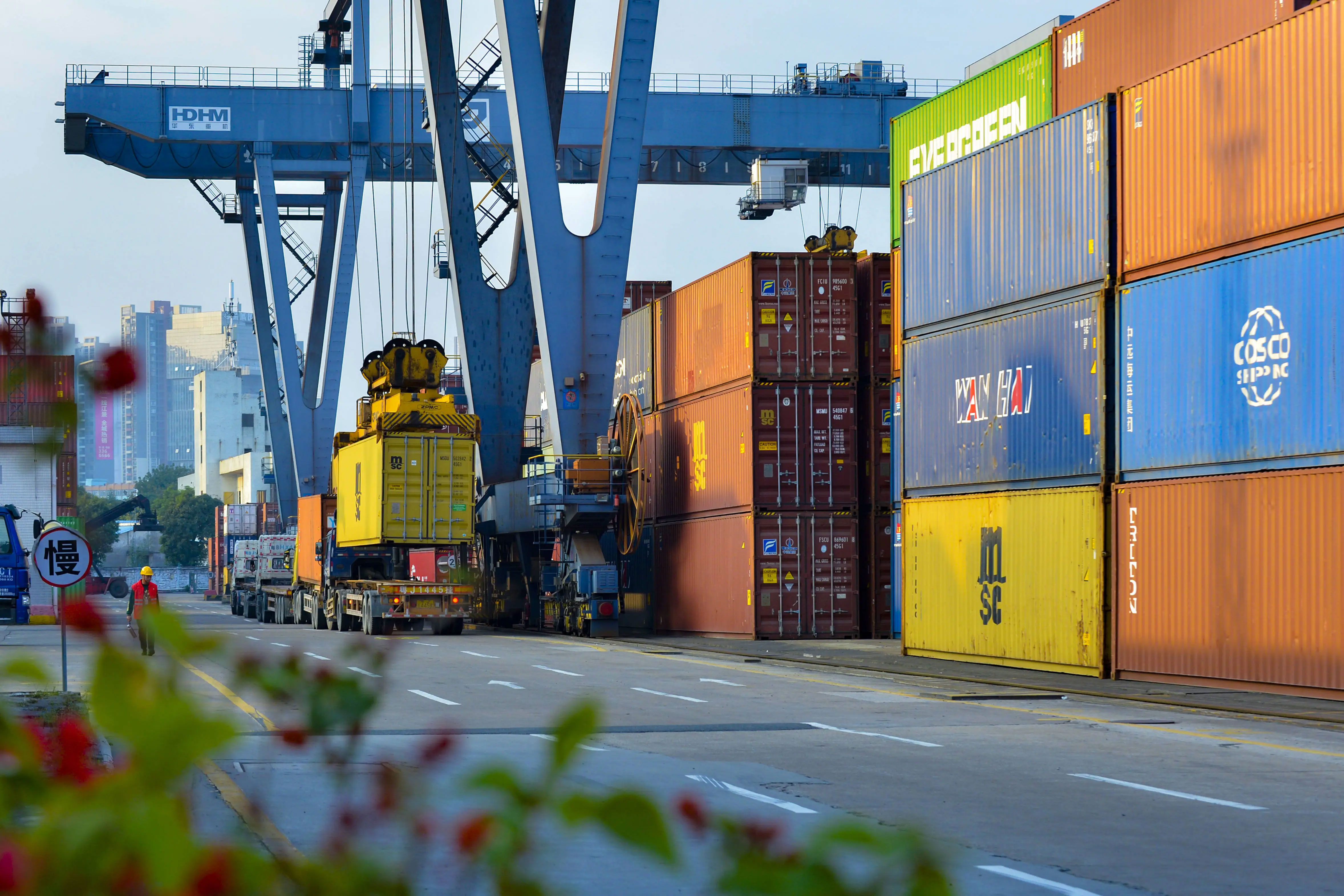
Brazil is facing negative pressure on its foreign trade amid tariffs imposed by the US and the massive influx of imports, especially from China.
By mid-August, the country had a trade surplus of US$41.75 billion (bn), a drop of 18.3% compared to the same period in 2024, according to federal government data. The result was influenced by the expansion of imports, which grew 8.7% in the period, while exports increased only 2.3%.
“The trend for the coming months is for an even worse scenario, with exports losing momentum due to tariffs imposed by the United States and imports rising,” José Augusto de Castro, president of the Brazilian Foreign Trade Association (AEB), told BNamericas.
Castro reduced his projection for the 2025 trade surplus to US$49 billion, down from a previous estimate of US$54.1 billion. In 2024, the country had recorded a surplus of US$74.6 billion.
The US recently imposed a 50% tariff on products exported from Brazil, the highest so far under the Donald Trump administration.
US president claimed political motivations, citing the ongoing trial against former right-wing Brazilian President Jair Bolsonaro, accused of attempting a coup d'état after being defeated in the 2022 elections by leftist President Luiz Inácio Lula da Silva.
Trump claims that the trial against Bolsonaro represents political persecution.
"The possibility of [former President Bolsonaro's] conviction increases the risks for Brazilian exports. The imposition of additional tariffs by the United States or the withdrawal of exemptions already granted to some sectors cannot be ruled out," Castro said.
When the tariffs were announced, some strategic sectors in Brazil were spared, such as the aircraft, vehicle and specific parts manufacturing industry, as well as certain iron, steel, aluminum and copper products, as well as some minerals and oil and gas.
The tariff issue involving the US, however, is not the only force weighing on Brazil's trade balance. In recent quarters, Brazil has witnessed a massive influx of Chinese products, particularly steel and electric vehicles, which has raised concerns in local sectors.
Steel companies in Brazil have been pressuring the federal government against these imports and have announced investment cuts and even layoffs at their plants across the country. The situation, however, is complex.
"There's a significant influx of Chinese steel into Brazil, which is significantly affecting the local industry, as Chinese steel production costs are much lower, and there are government programs there to encourage this. However, the Brazilian government has limitations on its actions, as it cannot create tensions with China amid existing trade tensions with the United States," Pedro Galdi, an analyst at AGF Investimentos, told BNamericas.
China is Brazil's main trading partner, while the United States ranks second.
POSITIVE SIGNS
Despite the challenges involving Brazil's two largest trading partners, positive signs are also emerging.
"There are two positive factors on the trade side. One that is happening now, which is the increase in Brazilian exports to Argentina, and another, longer-term, which is the signaling of possible progress on a free trade agreement between Mercosur and the European Union," said Castro.
Argentina has historically been an important partner of Brazil, and after years of contraction, Brazilian exports to the country have been growing amid signs of economic recovery in the neighboring nation.
At the same time, European Union leaders have been signaling progress towards approving a free trade agreement with Mercosur, a bloc formed by Argentina, Brazil, Paraguay and Uruguay.
Related Posts
- ▶ Hyundai Steel, POSCO Start $5.8B Louisiana Steel Plant
- ▶ Vale and ABB Expand AI in Brazil Iron Ore Operations
- ▶ Nucor Steel reported adjusted net income of $1.11 billion in the second quarter.
- ▶ JSW Steel Boosts Output 3% in July on India Growth
- ▶ ArcelorMittal is considering building a second electric arc furnace in Calvert
- ▶ US Probes Stainless Steel Pipe Imports From 3 Countries
- ▶ US Exempts Brazilian Pig Iron From 25% Tariff
- ▶ Regional Billet Prices Fell $5-15/T in June Markets
- ▶ EU Steel Producers Urge Stronger CBAM Rules
- ▶ Global Steel Production Fell 0.3% YoY in May 2026
Online Message


Leave A Message
If you are interested in our products and want to know more details, please leave a message here, we will reply you as soon as we can.